
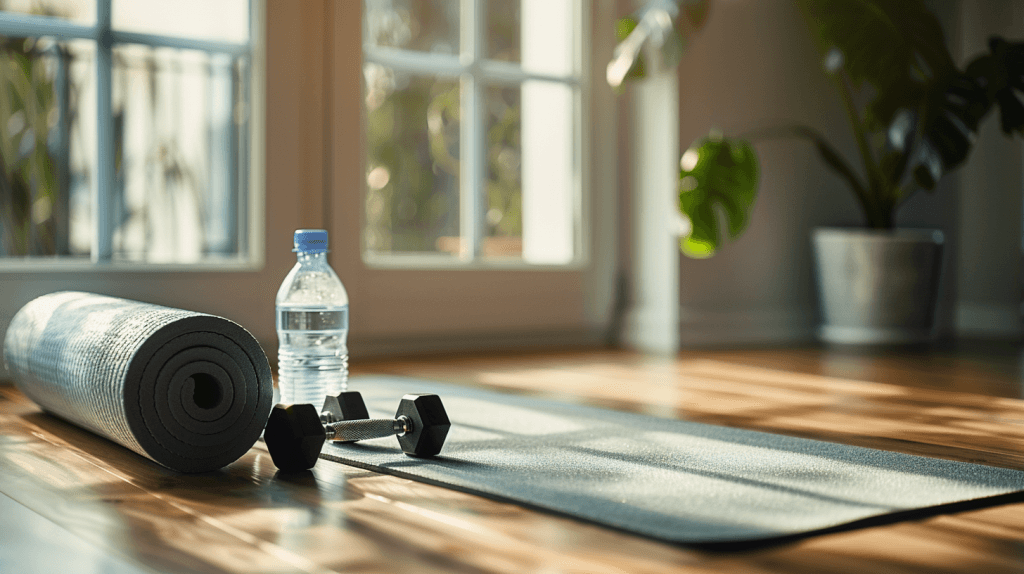
A lot of people do not struggle with the idea of exercise, they struggle with actually starting. It can feel like you need more time, more motivation, the right gym, or the perfect plan before you are allowed to begin, so the bar for what “counts” as exercise creeps higher and higher, it has to be a full hour, a flawless program, at least four days per week, and you have to feel ready. If that is your standard, it makes sense that you never quite feel like you are “in.” The bar is so high you can barely see it. This blog is about doing the opposite, lowering the bar on purpose, and walking through some of the easiest, lowest barrier ways to start moving more, whether that is at home, outside, or inside a gym, so starting feels simple instead of stressful. Research keeps finding the same big obstacles you probably feel yourself, lack of time, low motivation, and past unpleasant experiences with exercise show up over and over as major barriers to being active (Perera).
Make It Smaller Than You Think
Most people imagine their ideal workout week first, then try to jump from zero to that, which is like going from never cooking to planning a five course dinner every night, it sounds impressive but it collapses in three days. A helpful rule of thumb here is, “If something seems too hard to start, then your first step is not small enough,” if every version of your plan feels overwhelming, the problem is not you, it is the size of the step. Instead of asking, “What is the best routine?” try asking, “What is the smallest version of exercise that I am actually willing to do this week?” Maybe that is a ten to fifteen minute walk most days, one or two visits to a gym, one beginner friendly class, or two short sessions at home with bodyweight or light weights. None of that is the fastest way to get shredded for summer, however it is a real, meaningful starting point that your body will recognize as “we are moving again.” If you design your routine to look good on paper it will be fragile, if you design it to be small and doable it will be sustainable.
Walking On Purpose
Walking is one of the easiest ways to start moving more, especially if you are feeling out of shape or intimidated by gyms.
Why it is such a good entry point:
No special skill needed
No equipment, besides shoes
You can do it near your home or work
You can break it into small chunks
Here are some simple ways to build it in:
Ten minute walk after one meal each day
Parking a little farther and walking in
Walking phone calls when possible
Weekend walk and talk with a friend or family member
You do not need a specific pace or step count to start. Just more steps than you are taking now, consistently. Research on “exercise snacks,” short bouts of activity under ten minutes, shows they can still improve health markers and that people often stick to them very well, which makes them a realistic starting point for busy adults (Brown).
Once walking feels normal, it is way easier to add other things on top.
A Tiny Home Routine
For a lot of people, the first thought when they hear “work out at home” is something like:
“Well that is lame.”
“No one actually works out at home.”
“If I am not in a real gym, it does not count.”
So let us crush that lie right away.
Home workouts are not a downgrade. They are just a different setting. Your muscles and joints do not care whether you are in a fancy building or your living room. They care if you move and load them consistently. Home based programs have even been shown to improve strength and function and reduce falls in older adults when people follow them, which tells us that simple, at home exercise can create very real physical changes (Liu-Ambrose).
If the gym feels like too big a leap, you can start at home with almost no equipment.
Pick three to four simple movements that use a lot of your body at once, for example:
Sit to stand from a chair
Wall push ups or counter push ups
Hip hinge, like a Romanian deadlift pattern with no weight
A gentle row with a band or towel
Easy dead bug or glute bridge for core and hips
Then:
Set a timer for ten to twenty minutes
Rotate through the movements slowly
Rest when you need to
Stop when the timer goes off
You are not trying to crush yourself. Later, if you join a gym or take a class, these basic movement patterns will already feel familiar, and that makes walking into a new space a lot less scary.
One Class Per Week As An Anchor
If you are interested in classes but nervous, start with one.
Not “I will do classes every day.”
Not “I have to be consistent forever starting now.”
Just one class per week as your anchor.
If you are not sure what kind of class you even like yet, something like ClassPass can be a useful tool. It lets you try different types of classes and studios, from strength to yoga to cycling, without marrying the first gym you meet.
Over time, that one class can be the anchor you build the rest of your week around.
Pre Booking Like A Dentist Appointment
One of the biggest barriers to starting is “I will do it when I feel like it.”
The day gets busy, you get tired, and your workout falls off the end of the list.
Instead, treat your workouts more like you treat the dentist.
When you book a dentist appointment you:
Put it on the calendar
Arrange your day around it as best you can
Show up even if you do not feel thrilled about going
Of course, not everyone can take long chunks of time off work just to exercise. Many jobs are not that flexible. That is why it helps to start with smaller blocks at times that are more realistic for you, early mornings, lunch breaks, evenings, or pockets on your days off.
You might not be able to say, “From now on I take two hours off every afternoon to train.” That is fine. Start with short, protected windows that you treat as appointments with yourself, then stretch those windows as your schedule and confidence allow.
Borrowing A Plan For Your First Month
“I do not know what to do” is a very real barrier.
You do not have to invent your own program from scratch. For your first month, it is completely fine to borrow structure from someone else.
Options:
Follow a very simple beginner plan from a coach you trust
Join a small group or semi private session designed for beginners
Use classes as your main plan while you learn
For many people, the easiest entry into consistent exercise is:
One or two days per week of a class or coached session
One or two days per week of a simple home or walking routine
Once moving feels normal, you can get pickier about specific goals and programs.
Adjusting For Pain, Past Injuries, Or Low Confidence
Another huge barrier is worry about pain or hurting yourself.
This is where “easiest entry” does not mean “go all out.” It means:
Choosing low impact options, especially at first
Starting with lighter weights or bodyweight
Taking more rest than you think you “should”
Telling your coach about past injuries so they can help you modify
If you have a history of pain, it can help to say something like:
“My knees and lower back have been sensitive. I want to move, but I am nervous. Can you help me find versions that feel safe?”
You do not need to go from zero to jumping, sprinting, or heavy lifting in one step. There is a very wide middle zone where you can build strength, confidence, and capacity while still respecting your body.
How We Keep The Entry Point Low At Our Gym
At Pure Function Fitness, we assume a lot of people walking in are either:
Coming back after injuries, stress, or a busy season, or
Starting for the first time in a long time
So we keep the barriers to entry as low as possible:
You do not need to be in shape before you come in
We demonstrate movements and offer simpler options
We are fine with you taking breaks, asking questions, and going at your own pace
If you are gym curious and want an easy first step, we would be a great first option
Book your first class or trial here
At the end of the day, the hardest part is not mastering the perfect workout, it is taking the first few imperfect reps of a new habit. Whether that looks like a ten minute walk, a short home routine, one class per week, or a quick gym visit you treat like a dentist appointment, every low barrier choice is a quiet vote for the future you want. You do not have to fix everything this month. You just have to lower the bar enough that starting feels possible, then keep nudging that door open, one small, doable step at a time.
References
Brown, Nashira I., et al. “Health-Related Benefits and Adherence for Multiple Short Bouts of Aerobic Physical Activity Among Adults.” American Journal of Lifestyle Medicine, vol. 19, no. 1, 2024, pp. 58–72.
Liu-Ambrose, Teresa, et al. “Effect of a Home-Based Exercise Program on Subsequent Falls Among Community-Dwelling High-Risk Older Adults After a Fall: A Randomized Clinical Trial.” JAMA, vol. 321, no. 21, 2019, pp. 2092–2100.
Perera, Madhawa, et al. “Perceived Barriers and Facilitators of Physical Activity in Adults Living in Activity-Friendly Urban Environments: A Qualitative Study in Sri Lanka.” PLOS ONE, vol. 17, no. 6, 2022, e0268817.